

Introduction
In the heart of every modern factory, a silent, powerful workhorse drives countless processes: the industrial air compressor. For decades, this critical piece of equipment was synonymous with high energy bills, complex maintenance, and unpredictable downtime. However, a technological revolution, led by innovative manufacturers, is transforming this landscape. At the forefront of this change is Seize Air, a global pioneer in energy-efficient air compressors, whose advanced screw compressor technology is setting new benchmarks for performance, reliability, and sustainability. This article delves into the core advancements that make modern screw compressors, particularly those from leaders like Seize Air, an indispensable asset for any forward-thinking operation.
The High Cost of Compressed Air: Understanding the Core Challenges
Before exploring the solutions, it's crucial to understand the persistent pain points that have plagued industrial users for years. Compressed air is often called the "fourth utility" due to its widespread use and significant cost.
Skyrocketing Operational Costs: The most glaring issue is energy consumption. It's a well-documented fact that electricity can account for up to 70-80% of an air compressor's Total Cost of Ownership (TCO) over its lifespan. A single inefficient unit can add tens of thousands to annual operational budgets.
The Burden of Unplanned Downtime: Reliability is non-negotiable. A sudden compressor failure can halt an entire production line, leading to missed deadlines, wasted materials, and damaged customer relationships. The stress and financial impact of such events are immense.
Maintenance Complexity and Cost: Beyond energy, maintaining a compressor is a recurring expense and logistical challenge. Sourcing genuine parts, scheduling qualified technicians, and managing the inventory of filters, oil, and separators adds layers of cost and administrative burden.
These challenges created a clear market demand: a compressor that was not just a machine, but a reliable, efficient, and intelligent partner in production.
Engineering Excellence: The Technological Pillars of Modern Efficiency
The answer to these challenges lies in sophisticated engineering. Leading manufacturers have moved beyond basic compression to integrate smart, energy-saving technologies directly into their core design.
1. The Heart of Savings: Permanent Magnet Variable Speed Drive (PM VSD)
This is arguably the most significant innovation in compressor technology in recent years. Unlike traditional fixed-speed compressors that run at a constant RPM regardless of demand, a PM VSD compressor intelligently adjusts its motor speed to match the exact air requirement of the facility.
How it Works & Its Impact:
Precision Matching: Using an advanced frequency converter, the motor speed varies (e.g., from 25% to 100% of its capacity). If a production line only needs 60% of the compressor's maximum output, the motor slows down to deliver precisely that, eliminating the wasteful "load/unload" cycles of older models.
Superior Motor Efficiency: These systems utilize permanent magnet synchronous motors rated at IE4 or even IE5 efficiency class—the highest standards for electric motor efficiency. This means less electrical energy is lost as heat, and more is converted into useful compressed air.
Real-World Savings: The energy savings are dramatic. In applications with fluctuating demand, which is most industrial settings, VSD technology can reduce energy consumption by 30% to 50% compared to fixed-speed alternatives. For a manufacturer running multiple shifts, this translates to a rapid return on investment.
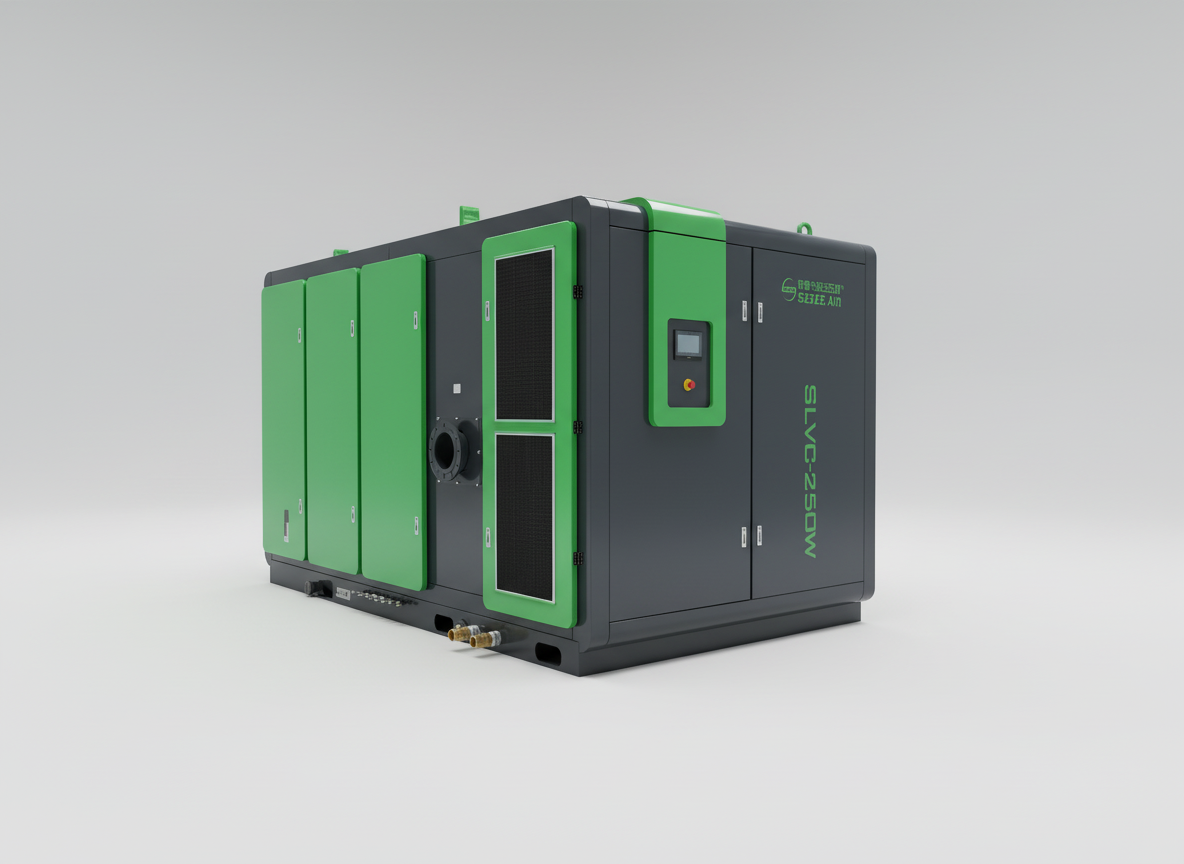
A Case in Point: Seize Air's PM VSD SeriesCompanies like Seize Air have perfected this technology. Their PM VSD compressors are engineered not just to meet but to exceed China's stringent National Grade 1 energy efficiency standard (GB 19153-2009), with many models achieving "Beyond Class 1" performance as independently verified by SGS. This isn't a marginal improvement; it's a leap in operational economics.
2. Enhanced Performance with Two-Stage Compression
For applications requiring higher pressure or greater volumetric efficiency, two-stage compression offers a superior solution. This technology splits the compression process into two steps.
The Technical Advantage:
Lower Compression Ratio per Stage: By compressing the air in two phases with an intercooler in between, each stage operates at a lower compression ratio. This significantly reduces the temperature rise during compression.
Key Benefits: Lower temperatures mean less thermal stress on components, reduced internal leakage (as clearances are better maintained), and higher overall isothermal efficiency. The result is more air delivered per kilowatt-hour of electricity consumed and enhanced long-term reliability of the compression element.
Manufacturers like Seize Air integrate this into series like their PM VSD Double-Stage models, combining the efficiency of two-stage compression with the adaptability of variable speed control for maximum performance across a wide range of operating conditions.
3. Holistic System Design for Peak Performance
True efficiency extends beyond the compressor block. It encompasses the entire system designed to support it.
Optimized Thermal Management: Advanced designs feature enlarged cooling systems with high-efficiency fans and optimized airflow paths. This ensures stable operating temperatures even in demanding environments, protecting components and maintaining efficiency.
Minimized Pressure Loss: The internal air and oil pathways are engineered with computational fluid dynamics to reduce flow resistance. Every kilowatt saved from overcoming internal friction is a kilowatt delivered as usable compressed air.
Intelligent Air Intake: Features like external cold air intakes draw in cooler, denser air from outside the compressor room. Cooler intake air requires less energy to compress, providing a free efficiency boost. This is coupled with high-efficiency filtration systems, such as pre-cyclone separators, to protect the compressor from particulate contamination.
Beyond the Machine: The Value of Partnership and Service
Purchasing a high-efficiency compressor is a major capital decision. However, the real value for customers unfolds over the 10-15 year lifecycle of the equipment. This is where the philosophy of the manufacturer becomes critical.
The most forward-thinking companies understand that their role extends far beyond selling a machine. As articulated by Seize Air, the goal is not merely to win an order but to ensure customers "feel relaxed and satisfied with all we have served." This philosophy manifests in several key areas:
Project Management Expertise: For complex installations or complete compressed air system overhauls, customers need a "professional, reliable and efficient project management team." This ensures the new system is perfectly integrated into the existing infrastructure, from piping and dryers to control systems.
Proactive and Professional Service: Reliable, prompt, and knowledgeable service is the bedrock of uptime. A global network of service outlets, stocked with genuine parts and staffed by factory-trained technicians, transforms maintenance from a headache into a scheduled, predictable event.
Lifecycle Support: From initial consultation and system design to installation, commissioning, and ongoing maintenance, a true partner manages the entire lifecycle, allowing the customer to focus on their core business.
Trust Built on Verification: The Importance of Certifications and Proven Track Records
In an industry where promises are plentiful, verifiable proof is essential. Customers should look for manufacturers who back their claims with tangible evidence.
Seize Air exemplifies this approach with a "Commitment to Excellence: Proven by Global Standards." Their confidence is built on a solid foundation of over 100 industry certificates and patents. This portfolio is not for show; it's a guarantee of quality and performance.
Pioneering Innovation (12 Invention Patents): This demonstrates a deep investment in Research & Development. It means the technology isn't just assembled from bought parts; it's innovated from within, leading to proprietary advantages in efficiency and durability.
Independent Verification: Third-party testing by renowned bodies like SGS provides unbiased confirmation of performance claims, especially regarding energy efficiency. This removes doubt and provides a clear, comparable metric for decision-making.
A Legacy of Impact: The most compelling trust signal is a proven history of delivering results. With over 30,000 energy-efficient compressors sold globally and cumulative sales exceeding 3 million kW, the scale of adoption speaks volumes. The reported savings for their customers—a staggering 2.5 billion USD in electricity costs and a reduction of around 15 million tonnes of carbon emissions—is a powerful testament to the real-world efficacy of their technology.
Conclusion
The era of the air compressor as a simple, energy-intensive utility is over. Today, it is a sophisticated, intelligent system that represents a significant opportunity for operational optimization and sustainability. The key for any industrial user is to look beyond the initial price tag and evaluate the total cost of ownership, reliability, and the quality of the partnership offered.
Manufacturers like Seize Air, with their core focus on permanent magnet VSD technology, two-stage compression, and holistic system design, are leading the charge. They combine engineering prowess with a service-oriented philosophy and a verifiable track record of saving energy and reducing downtime. By choosing a partner that embodies these principles, businesses are not just buying a compressor; they are investing in a more efficient, reliable, and profitable future. The revolution in compressed air is here, and it is powered by intelligence, efficiency, and proven performance.

发表回复