

Compressed air is the fourth utility in European industry—yet its regulatory landscape is shifting faster than most plant managers realize. If you operate air compressors anywhere in the EU, you are already subject to a web of regulations governing fluorinated gases, energy efficiency, product design, machinery safety, and carbon accounting. Non-compliance is not merely a fine risk; it can block market access, invalidate insurance, and disqualify you from industrial tenders.
This article maps the regulatory terrain that European compressed air users must navigate in 2026—from the revised F-Gas Regulation to the new Machinery Regulation, from Ecodesign requirements to the Energy Efficiency Directive. We focus on practical answers: what changes, who is affected, what the deadlines are, and how to align your compressed air system with current and forthcoming EU law.
1. Why EU Compressed Air Regulation Matters Now
Three forces are converging to make 2026 a pivotal year for compressed air compliance in Europe:
First, the regulatory pipeline is full. The revised F-Gas Regulation (EU 2024/573) entered into force in March 2024, with key phase-down milestones hitting between 2025 and 2027. The new Machinery Regulation (EU 2023/1230) becomes mandatory in January 2027, replacing the Machinery Directive after a transition period. The Ecodesign for Sustainable Products Regulation (ESPR) entered into force in July 2024, expanding the scope of regulated products. These are not distant policy papers—they have hard deadlines attached.
Second, enforcement is tightening. EU Member States are increasing market surveillance under Regulation (EU) 2019/1020. Customs authorities now have clearer powers to detain non-compliant products at the border. The days of “compliance by declaration” without verification are numbered.
Third, the business case aligns with the regulatory case. Energy represents over 70% of the lifecycle cost of an air compressor. Regulations that drive energy efficiency—notably the Ecodesign framework and the Energy Efficiency Directive—directly reduce operating costs. Compliance is not just about avoiding penalties; it is about capturing savings.
Compressed air is the fourth utility in European industry—yet its regulatory landscape is shifting faster than most plant managers realize. If you operate air compressors anywhere in the EU, you are already subject to a web of regulations governing fluorinated gases, energy efficiency, product design, machinery safety, and carbon accounting. Non-compliance is not merely a fine risk; it can block market access, invalidate insurance, and disqualify you from industrial tenders.
This article maps the regulatory terrain that European compressed air users must navigate in 2026—from the revised F-Gas Regulation to the new Machinery Regulation, from Ecodesign requirements to the Energy Efficiency Directive. We focus on practical answers: what changes, who is affected, what the deadlines are, and how to align your compressed air system with current and forthcoming EU law.
1. Why EU Compressed Air Regulation Matters Now
Three forces are converging to make 2026 a pivotal year for compressed air compliance in Europe:
First, the regulatory pipeline is full. The revised F-Gas Regulation (EU 2024/573) entered into force in March 2024, with key phase-down milestones hitting between 2025 and 2027. The new Machinery Regulation (EU 2023/1230) becomes mandatory in January 2027, replacing the Machinery Directive after a transition period. The Ecodesign for Sustainable Products Regulation (ESPR) entered into force in July 2024, expanding the scope of regulated products. These are not distant policy papers—they have hard deadlines attached.
Second, enforcement is tightening. EU Member States are increasing market surveillance under Regulation (EU) 2019/1020. Customs authorities now have clearer powers to detain non-compliant products at the border. The days of “compliance by declaration” without verification are numbered.
Third, the business case aligns with the regulatory case. Energy represents over 70% of the lifecycle cost of an air compressor. Regulations that drive energy efficiency—notably the Ecodesign framework and the Energy Efficiency Directive—directly reduce operating costs. Compliance is not just about avoiding penalties; it is about capturing savings.
The revised regulation imposes a steeper quota reduction schedule than its predecessor (EU 517/2014). The key numbers:
| Year | HFC Quota (as % of 2015 baseline) | Key Milestone |
|---|---|---|
| 2024 | ~23.6% | New regulation enters force |
| 2027 | ~10% | Major step-down |
| 2030 | ~5% | Near-phaseout for most uses |
| 2036 | 0% | Complete ban on new HFC equipment (with limited exemptions) |
| 2050 | — | Full phase-out of HFCs in existing equipment |
What this means for your compressed air system: If you are purchasing a new refrigerated dryer or an air-cooled compressor with an integrated refrigerant circuit, verify which refrigerant it uses. Equipment using high-GWP refrigerants (R-404A, R-507A, R-134a with high charge sizes) will become increasingly expensive to service—and eventually impossible to recharge with virgin refrigerant. The regulation already bans the servicing of certain equipment with high-GWP refrigerants, with bans expanding by GWP threshold and charge size through 2032.
2.2 Leak Checking and Record-Keeping
The revised regulation tightens leak-check obligations. The frequency depends on the CO₂ equivalent of the refrigerant charge:
- 5 to 50 tonnes CO₂ equivalent: check every 12 months (or every 24 months with an automatic leak detection system)
- 50 to 500 tonnes CO₂ equivalent: check every 6 months (or every 12 months with automatic detection)
- Above 500 tonnes CO₂ equivalent: check every 3 months (or every 6 months with automatic detection)
For most industrial refrigerated dryers, the charge size is modest—typically below the 5-tonne CO₂ equivalent threshold. However, larger air-cooled compressor installations or centralized dryer systems may trigger these requirements. Maintain a refrigerant logbook and ensure any technician performing leak checks holds the appropriate certification under the F-Gas Regulation.
2.3 The Shift to Low-GWP Alternatives
The regulation is explicitly designed to accelerate the transition to low-GWP refrigerants. For compressed air applications, this means:
- R-513A (GWP 631) as a drop-in replacement for R-134a in many dryer applications
- R-1234yf (GWP 4) and R-1234ze (GWP 7) for new equipment
- R-290 (propane) (GWP 3) for smaller systems, subject to safety standards for flammable refrigerants (EN 378)
When specifying new equipment, choose dryers and compressors that use low-GWP refrigerants. This future-proofs your investment against the tightening quota schedule and avoids the risk of stranded assets.
3. Ecodesign: From Directive to Regulation
3.1 The Current Framework: Ecodesign Directive (2009/125/EC)
The Ecodesign Directive establishes minimum energy performance standards for energy-related products sold in the EU. Air compressors are not currently covered by a dedicated Ecodesign implementing regulation—a notable gap, given that compressed air systems account for approximately 10% of industrial electricity consumption in Europe.
However, components within compressed air systems—electric motors and fans—are already regulated:
- Electric motors (EU 2019/1781): Minimum efficiency levels at IE3 (Premium Efficiency) for motors from 0.75 kW to 1,000 kW, with IE4 (Super Premium Efficiency) required for motors from 75 kW to 200 kW as of July 2023. Most industrial air compressors use motors in this range.
- Fans (EU 327/2011): Minimum efficiency requirements for fans used in air-cooled compressors and dryers.
Practical impact: Any air compressor sold in the EU market must use motors meeting at least IE3 efficiency. Leading manufacturers, including SEIZE AIR, have already transitioned to IE4 and IE5 motors across their industrial compressor ranges, exceeding the regulatory minimum.
3.2 The New Ecodesign for Sustainable Products Regulation (ESPR)
The ESPR (EU 2024/1781), which entered into force in July 2024, fundamentally expands the Ecodesign framework. It moves beyond energy efficiency to address the entire product lifecycle:
- Durability and repairability: Products must be designed for longer life and easier repair
- Recyclability and recycled content: Requirements for recycled materials and end-of-life recovery
- Digital Product Passport (DPP): A mandatory digital record containing product information, materials data, and circular economy metrics
- Carbon footprint disclosure: Requirements to disclose and eventually limit the carbon footprint of products
- Substances of concern tracking: Full material disclosure requirements
The ESPR empowers the European Commission to adopt delegated acts for specific product groups. While air compressors are not yet the subject of a specific delegated act, the regulatory direction is clear: the industry should expect product-level requirements covering energy efficiency, repairability, and material circularity within the next 3–5 years.
What to do now: When evaluating compressed air equipment, ask suppliers about:
- Motor efficiency class (IE4 minimum for industrial compressors)
- Availability of spare parts and repair documentation
- Use of recycled or recyclable materials
- Readiness for Digital Product Passport requirements
- Design for disassembly and end-of-life recovery
Mandatory third-party assessment: For certain high-risk machinery categories, the regulation requires conformity assessment by a notified body rather than self-declaration. While standard industrial air compressors are not in this category, specialized high-pressure or safety-critical compressor installations (e.g., breathing air compressors) may trigger additional requirements.
5.2 What End-Users Need to Check
When purchasing a new air compressor for installation in the EU:
- CE marking: The equipment must bear the CE mark with the new regulation reference (EU 2023/1230) after 20 January 2027
- Declaration of Conformity: Verify that the declaration references the correct applicable standards (EN 1012-1 for compressors, plus any applicable electrical, EMC, and pressure equipment standards)
- Instructions in your official language: The regulation requires instructions in the official EU language(s) of the Member State where the machinery is placed on the market
- Cybersecurity documentation: For connected equipment, request documentation on cybersecurity measures and vulnerability management
6. Additional Regulatory Dimensions
6.1 The Corporate Sustainability Reporting Directive (CSRD)
The CSRD (EU 2022/2464) requires large companies and listed SMEs to report on sustainability matters, including energy use and greenhouse gas emissions. Compressed air energy consumption is part of Scope 1 and Scope 2 emissions reporting. Companies subject to CSRD should ensure their compressed air energy data is auditable and traceable.
6.2 The EU Emissions Trading System (EU ETS)
While the EU ETS primarily covers direct emissions from large industrial installations, the rising carbon price (reaching over €80 per tonne in 2026) increases the financial incentive to reduce electricity consumption—including from compressed air systems. Every kWh saved translates directly into avoided carbon costs, whether through lower electricity bills or reduced ETS allowance requirements.
6.3 National-Level Incentives
Many EU Member States offer financial incentives for energy efficiency investments in compressed air systems:
- Germany: BAFA funding for compressed air efficiency measures, including VSD retrofits, heat recovery, and leak management systems (Module 1 of the “Bundesförderung für Energie- und Ressourceneffizienz”)
- France: CEE (Certificats d’Économies d’Énergie) scheme providing subsidies for compressed air audits and efficiency upgrades
- Italy: “Industria 4.0” tax credits for investments in energy-efficient industrial equipment, including smart compressed air systems
- Spain: CAE (Certificados de Ahorro Energético) system for verified energy savings projects
- Netherlands: EIA (Energie-investeringsaftrek) tax deduction for energy-efficient investments
Check with your national energy agency or a qualified energy consultant to identify available programmes.
7. Practical Compliance Roadmap for Compressed Air Users
Based on the regulatory landscape outlined above, here is a prioritized action plan for European manufacturers operating compressed air systems:
Immediate Actions (0–6 Months)
- Conduct a compressed air energy audit focusing on leak rates, pressure optimization, and system efficiency. Document baseline consumption.
- Inventory your refrigerated dryers and air-cooled compressors. Record refrigerant types, charge sizes, and GWP values. Identify equipment using high-GWP refrigerants scheduled for phase-down.
- Verify motor efficiency on all compressor drive motors (≥0.75 kW). Replace sub-IE3 motors with IE4 or IE5.
- Check for available national incentives for energy efficiency or decarbonization projects involving compressed air.
Medium-Term Actions (6–18 Months)
- Develop a leak management programme with scheduled ultrasonic leak detection surveys. Set a target leak rate (below 10% of total demand is a realistic goal).
- Evaluate VSD retrofits or new VSD compressor investments for systems with variable demand. Calculate ROI using current and projected electricity prices.
- Implement heat recovery from air-cooled or water-cooled compressors. Target space heating or process water pre-heating applications.
- Prepare for the Machinery Regulation by reviewing your compressor inventory against the new requirements. Replace any non-compliant legacy equipment before the January 2027 deadline.
Strategic Actions (18–36 Months)
- Transition to low-GWP refrigerants in all new dryer and air-cooled compressor purchases.
- Implement ISO 50001 or a compatible energy management system if not already in place.
- Evaluate Digital Product Passport readiness with your equipment suppliers. Request material composition data and repairability documentation.
- Integrate compressed air energy data into CSRD reporting systems if applicable to your organization.
8. How SEIZE AIR Supports EU Regulatory Compliance
At SEIZE AIR, we design our compressed air products with European regulations as a design input, not an afterthought. Our industrial compressor range is engineered to meet and exceed the requirements discussed in this guide:
- IE4 and IE5 ultra-premium efficiency motors as standard across our industrial screw compressor range, exceeding Ecodesign motor requirements
- Oil-free screw compressor technology (SWT Series) for industries requiring ISO 8573-1 Class 0 air quality—pharmaceutical, food and beverage, electronics, and chemical processing
- Variable speed drive (VSD) integration across single-stage and two-stage compressor platforms, with proprietary control algorithms that optimize part-load efficiency
- Low-GWP refrigerant compatibility in our refrigerated dryer range, with R-513A and R-1234ze options available
- Full CE marking and EU Declaration of Conformity under the Machinery Directive, with transition to the Machinery Regulation (EU 2023/1230) well underway
- Cybersecurity-hardened IoT connectivity for remote monitoring, predictive maintenance, and energy management—designed to meet the new Machinery Regulation’s cybersecurity requirements
- Heat recovery-ready designs across our water-cooled compressor models, enabling direct integration with building heating or process heat systems
- Comprehensive technical documentation in multiple EU languages, with digital formats aligned to the Machinery Regulation’s new provisions
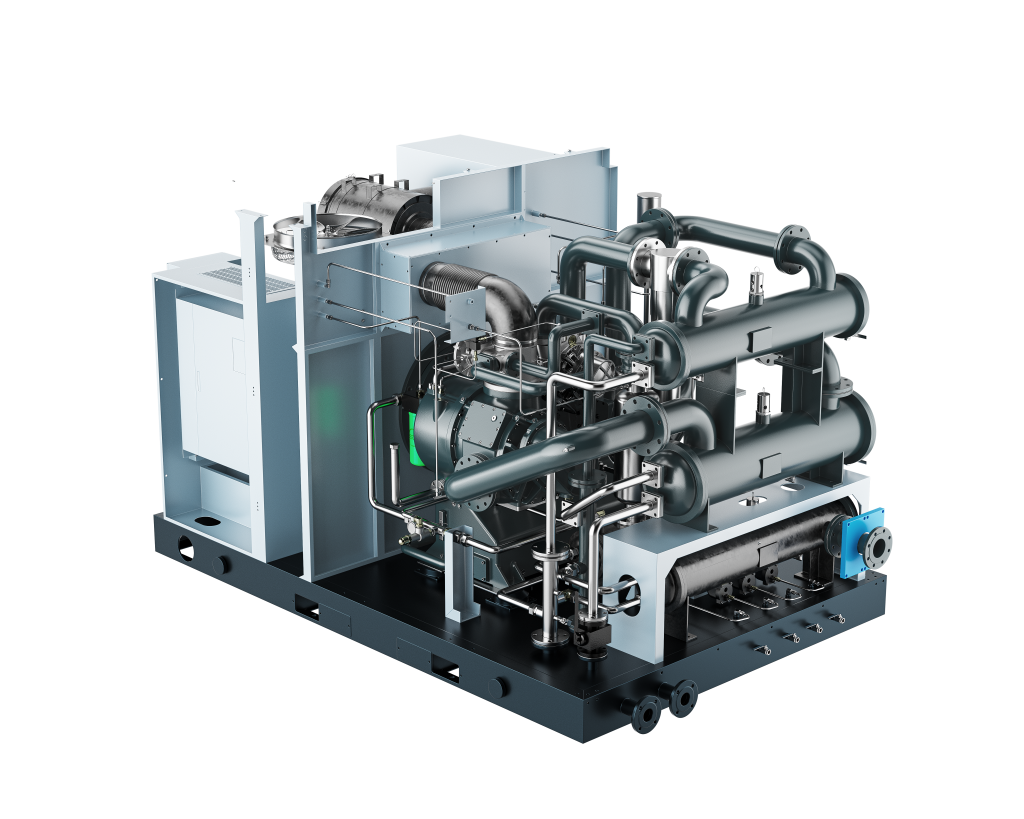
For European manufacturers investing in compressed air systems that must comply with current and forthcoming EU regulations, SEIZE AIR offers a product range built for the regulatory environment of 2026 and beyond. Our European sales and technical support team can assist with product selection, compliance documentation, and energy efficiency calculations tailored to your specific application and country requirements.
Conclusion: Regulation as Competitive Advantage
European compressed air regulations are not obstacles to be grudgingly overcome—they are catalysts for investment that pays back. The F-Gas phase-down pushes you toward modern, efficient dryers. The Ecodesign framework drives motor efficiency improvements that cut your electricity bill. The Energy Efficiency Directive incentivizes the leak repairs and system optimizations you should be doing anyway. The Machinery Regulation ensures the equipment you buy meets world-class safety and cybersecurity standards.
The manufacturers that treat regulatory compliance as a compliance exercise will incur costs. Those that treat it as an operational excellence programme will generate returns. The difference lies in how you specify, operate, and maintain your compressed air system.

发表回复